

Montessori Toys for Kids
Montessori Method Examples at Home
May
Montessori Method Examples at Home
Discover Montessori Home Examples to transform your home environment. These ideas guide the child toward independent growth and truly practical learning.
Core Principles of the Montessori Method Applied at Home
Living the essence of Montessori pedagogy a home is possible. Simply observe the child and support their natural desire to learn. The principles are few, but they have a transformative power when applied with consistency.
The Importance of the Prepared Environment
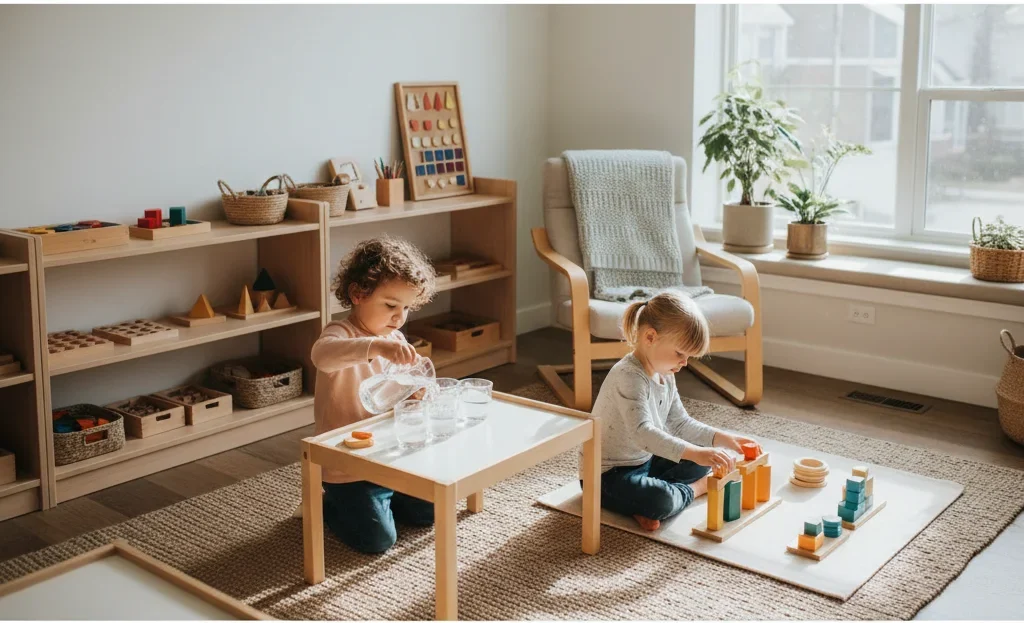
L’prepared environment is the first great teacher. At home, it means creating spaces that are orderly, accessible and beautiful. Child-sized furniture, real objects and dedicated places invite exploration. A clear environment gives a sense of security and fosters deep concentration.
The Role of the Adult as an Attentive Guide
The parent gives up the role of director to become a patient observer. They show how something is done, help only when needed and respect the child’s rhythm. This quiet attention nurtures theindependent learning and self-confidence, pillars of child development.
Freedom of Choice Within Defined Limits
The freedom of choice is essential, but always within clear boundaries. The child can choose among proposed activities, respecting basic rules. This balance, typical of a positive discipline, teaches responsibility. It is the freedom to explore in a safe and respectful context.
Organizing Home Spaces According to Montessori
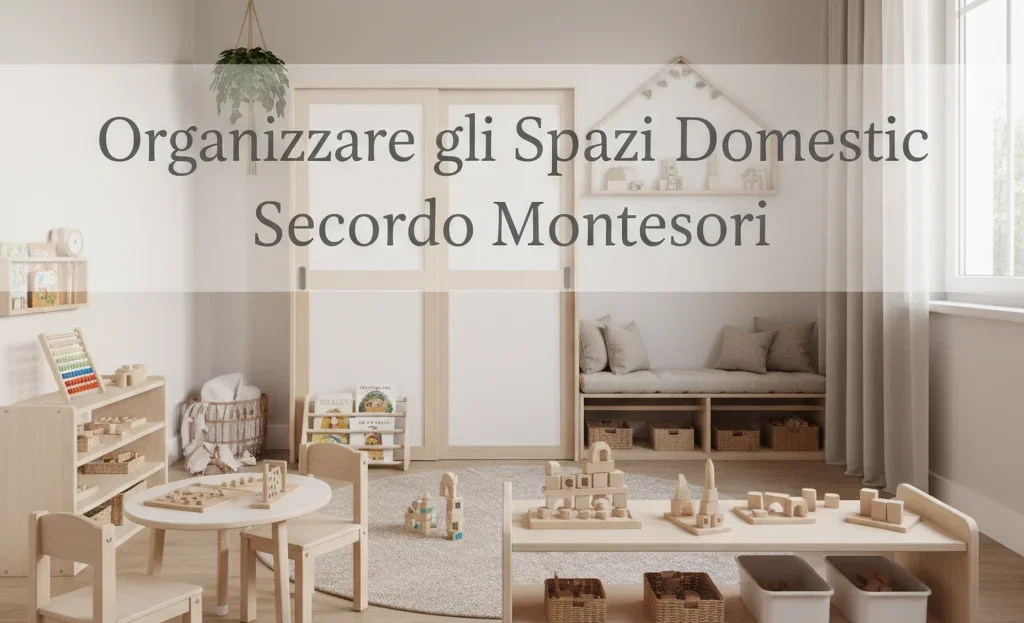
There is no need to overhaul the house, but to rethink it with fresh eyes. The goal is to promote thechild’s independence in every room, reducing their dependence on the adult.
The Child’s Room: A Nest of Autonomy
The children’s rooms Montessori are minimal, calm and functional. A low mattress, an accessible wardrobe and a few clothing choices. A shatterproof mirror at their height encourages self-discovery. The environment invites rest, play and self-care in complete autonomy.
Common Areas: Kitchen, Living Room and Learning Corners
Real life unfolds in the common areas. In the kitchen, a learning tower allows the child to help with meals. In the living room, a low bookshelf and a rug define a reading corner. Small tables become areas dedicated to Montessori activities.
Accessible and Functional Materials
Everything the child uses should be real, functional and within their reach. Small pitchers, wooden cutting boards, shoe brushes. These educational games are real tools for practical life. Physical accessibility is the key to encouraging their initiative.
Selecting and Rotating DIY Montessori Materials
There is no need to buy everything. Many sensorial materials can be made at home: sound boxes, sensory bottles, texture cards. The important thing is to present only a few at a time, carefully prepared and complete. Periodic rotation keeps interest alive and follows the child’s sensitive periods.
Examples of Everyday Montessori Activities
The day becomes a series of opportunities for hands-on learning. Activities fall into two main areas, essential for harmonious development.
Practical Life: Real Tasks for Development
The practical life exercises are the heart of the method at home. Through real tasks, the child refines coordination and concentration. They also develop a strong sense of belonging to the family. These activities build self-esteem more than any structured game.
Self-Care and Care of the Environment
Brushing hair, washing hands, dressing independently. Then, dusting, watering plants or setting the table. These are all practical examples of how care becomes education. Providing the right tools (small sponges, lightweight watering cans) is the fundamental step toward success.
Sensory and Cognitive Activities for Different Ages
For the youngest (2-3 years), pouring legumes or water refines movement and precision. From 3-4 years, the button boards for fastening buttons are introduced. From age 4 onward, the pink tower captivates and teaches dimensions. Each material isolates one quality (size, weight, colour) to refine the senses.
Developing Creativity and Concentration
Free art with quality natural materials encourages expression. Likewise, long uninterrupted periods of play are sacred. Avoiding filling every moment is crucial. Protecting these spaces of deep concentration is one of the greatest gifts a parent can give.
Benefits and Practical Tips for Parents
Applying the Montessori method at home is a journey of growth for the whole family. Benefits such as autonomy, security and a love of learning quickly become evident.
How to Promote Autonomy and Independence
The watchword is “trust”. Allow them to do things on their own, even if at first it will be slower. Organising the home so they can do so safely is the first step. Celebrate the effort, not just the result. This approach applies in everyday life and in a context of Montessori homeschooling o parental education.
Overcoming Common Challenges in Applying It at Home
The biggest challenge is often our haste and our perfectionism. Remember: the goal is not a spotless environment, but a capable child. Start with small changes, one room or one activity at a time. Observation, not judgement, is your compass. Be patient with yourself and with your child.
Useful Resources and Inspiration to Continue the Journey
To learn more, the works of Maria Montessori are essential. Online, many blogs and social media accounts offer parenting tips e Montessori Method examples at home visual and concrete ideas. Visiting a Montessori school or a workshop gives practical inspiration for theorganization of the bedroom and of activities.
The Montessori journey as a family is a path of respect and shared discovery. Every home will be unique, just as every child who lives in it is unique.
Useful reading:
Also read:
| What Are Montessori Toys? |
| DIY Montessori Games |
❓ Frequently Asked Questions
What Are Montessori Method Examples at Home?
Montessori Method Examples at Home are practical ideas for adapting the educational principles of Maria Montessori to the domestic environment. They help create spaces that foster the child’s autonomy, concentration and spontaneous learning through everyday activities.
How Do You Organise a Prepared Montessori Environment at Home?
A prepared environment at home is created by organising tidy, accessible and beautiful spaces, with child-sized furniture and real materials. The goal is for every room, from the bedroom to the shared areas, to promote independence and invite safe exploration.
What Is the Parent’s Role in Montessori Method Examples at Home?
The parent becomes an attentive guide and a patient observer, showing how activities are done and intervening only when necessary. This respectful approach supports the child’s independent learning and the development of self-confidence.
What Are Practical Examples of Montessori Activities in the Living Room or Kitchen?
Practical examples include a learning tower in the kitchen to help with food preparation, or a corner in the living room with a low bookshelf and a rug for reading. These dedicated areas turn everyday activities into learning opportunities.
Why Is Freedom of Choice Important in Montessori Method Examples at Home?
Freedom of choice within clear limits is essential because it teaches responsibility and respect. Allowing the child to choose between proposed activities in a safe context encourages positive discipline and their inner motivation.
💡 How to Implement Montessori Method Examples at Home
6 Steps
- Prepare the Environment
Create tidy, accessible and beautiful domestic spaces. Use child-sized furniture and place real objects on low shelves. A clear, prepared environment gives a sense of security and encourages concentration and independent exploration. - Organise the Bedroom
Turn the room into a nest of autonomy with a low mattress and an accessible wardrobe. Offer a few clothing choices and place a shatterproof mirror at the child’s height. This minimalist, functional environment invites rest, play and self-care. - Adapt the Shared Areas
In areas such as the kitchen and living room, create dedicated corners. In the kitchen, use a learning tower to involve the child in activities. In the living room, set up a low bookshelf with a rug to define a quiet reading corner. - Choose Functional Materials
Provide real, safe objects suited to small hands. Make sure everything is accessible and has a defined place. Concrete, functional materials support practical learning and the development of everyday skills. - Become an Attentive Guide
The adult should be a patient observer, showing how something is done and intervening only when necessary. Respect the child’s natural pace. This quiet attention nurtures independent learning and self-confidence. - Offer Freedom Within Limits
Let the child choose between proposed activities, but within clear rules and a safe context. This balance, typical of positive discipline, teaches responsibility and respect for the environment and for others.