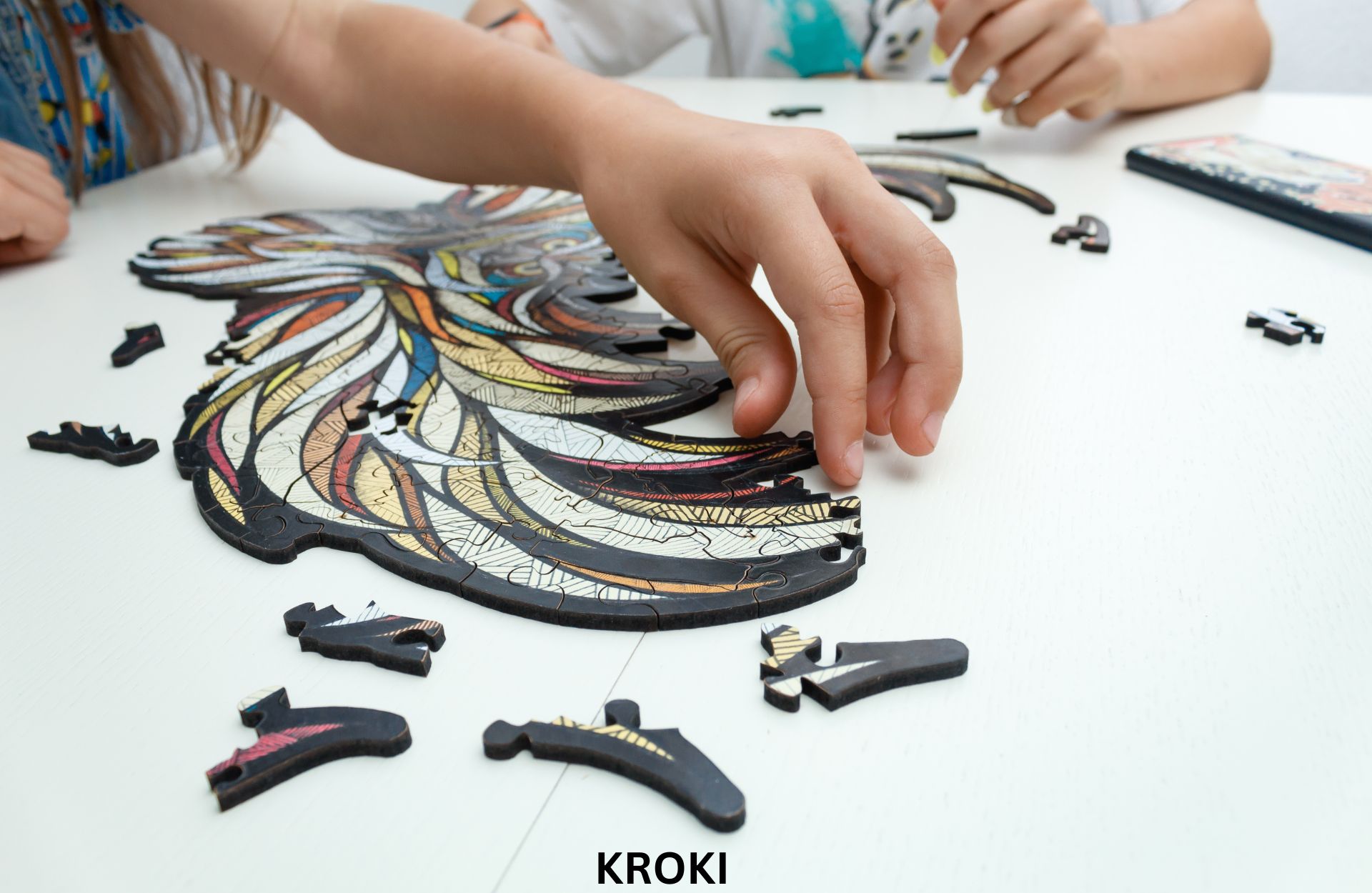
I Puzzle Jigsaw: What a Timeless Pastime Is
Jigsaw puzzles are a classic and timeless tabletop game, suitable for all ages. They consist of assembling the various pieces of a cut image to recreate the original scene. It is an activity that trains the mind, develops cognitive and manual skills, and stimulates patience and perseverance.
Jigsaw puzzles have an ancient history. The earliest evidence of this type of puzzle dates back to the ancient Roman Empire. But it was in 1760 that John Spilsbury, an English cartographer, invented the first modern jigsaw puzzle by cutting up a geographical map and offering it as an educational game.
Since then, the popularity of jigsaw puzzles has grown steadily. Today they are produced all over the world, with subjects and difficulty levels for every taste. The spread of high-definition digital images has further increased the quality and realism of the scenes depicted.
Let’s look in detail at what a jigsaw puzzle is, how it works, and why it is so loved by both adults and children.
What Is a Jigsaw Puzzle: Composition and How It Works
A jigsaw puzzle is made up of:
- An image, which can depict landscapes, works of art, photos, or illustrations.
- A backing of cardboard, plastic, or wood on which the image is printed.
- A cutting grid, which divides the image into many pieces of irregular shapes.
- The pieces themselves, which are cut along the grid and randomly mixed.
The goal of the game is to recreate the original image by correctly assembling all the pieces. Each piece has a unique shape that allows it to fit in only one position.
The edges of the pieces fit together perfectly. The white space separating them, once the puzzle is completed, reproduces the cutting grid.
To assemble the puzzle, you proceed by trial and error, trying different combinations until the pieces find their final place in the whole.
Types and Difficulty Levels
Jigsaw puzzles differ by:
- Subject: landscapes, artistic works, photographs, maps, etc.
- Number of pieces: from 12-24 pieces for young children, up to thousands for the most complex puzzles.
- Shape of the pieces: classic irregular shapes, or shaped pieces.
- Material: cardboard, wood, plastic, composite materials.
- Dimensions: individual puzzles or large ones even 2 x 1.5 meters.
Based on these characteristics, jigsaw puzzles are divided by difficulty level:
- Children’s puzzles, with large pieces and few details.
- 100-500 piece puzzles for teens and adults.
- 1000/1500 piece puzzles, medium-difficult.
- 2000-3000 piece puzzles, for enthusiasts.
- 5000 piece puzzles and up, extremely complex.
The benefits of jigsaw puzzles: an educational and recreational activity
What are the benefits of jigsaw puzzles? Let’s look at them point by point.
Development of cognitive skills Assembling a jigsaw puzzle requires:
- Exercising logic to fit the pieces together.
- Developing memory, to remember the position of the pieces.
- Training visualization and mental rotation of objects in space.
- Stimulating analytical and synthesis skills.
- Improving dimensional assessment skills.
Increased patience
Jigsaw puzzles teach you to be patient and to persevere to achieve a goal. Progress is slow, piece by piece. You must learn to calmly wait for each piece to find its place.
Improved concentration
Assembling a jigsaw puzzle requires great visual concentration. You must focus on details, meticulously comparing the shapes of the pieces. This hones attentional skills.
Enhanced problem solving
When faced with pieces to assemble, you must devise creative solution strategies. Jigsaw puzzles are continuous problem solving, which strengthens the ability to find solutions.
Stimulation of motor skills
Manipulating objects develops fine motor skills, such as precision in hand movements. Children refine hand-eye coordination.
Sense of gratification
Completing a jigsaw puzzle, especially a difficult one, gives great satisfaction. Overcoming the challenge and seeing the complete image rewards the effort and is a boost to self-esteem.
Relaxing recreational activity
Building a jigsaw puzzle relaxes the mind, keeps negative thoughts away, and relieves stress and anxiety. It is an anti-boredom pastime that keeps you pleasantly engaged.
Socialization and collaboration
Jigsaw puzzles can be a group activity. You chat, joke, and help each other. It is a great way to socialize and strengthen relationships with friends or family.
Artistic appreciation
Jigsaw puzzles often reproduce famous works of art. This brings adults and children closer to the world of art, encouraging appreciation of different artistic movements.
Educational activity The subjects of jigsaw puzzles can have a didactic intent. Puzzles of geographical maps, works of art, animals, alphabets, numbers, and so on are available, to learn while having fun.
Jigsaw Puzzles for Children and Teenagers
Jigsaw puzzles are an excellent educational and recreational tool for children and young people. Here is why they should be part of childhood.
Development of motor skills Manipulating the pieces improves coordination and dexterity of the hands. Children learn to make fine and precise movements.
Learning logic Reasoning about the placement of pieces teaches logical and deductive thinking. Jigsaw puzzles strengthen developing cognitive abilities.
Improved self-esteem Successfully completing a jigsaw puzzle, especially a challenging one, gives a great boost of self-esteem and a sense of competence.
Fun and creativity Jigsaw puzzles stimulate the imagination and fantasy of the little ones, and are a fun way to spend free time.
Social skills Building a jigsaw puzzle together fosters interaction with peers, teamwork, and communication.
Learning colors and shapes Jigsaw puzzles help children become familiar with colors and recognize basic geometric shapes.
Concentration Grouping the pieces requires prolonged concentration. Jigsaw puzzles exercise the attention of the little ones.
Hand-eye coordination Studying how to fit the pieces together and then executing the movements greatly improves coordination.
Patience and perseverance Overcoming the difficulties of a jigsaw puzzle teaches you not to get discouraged at the first hurdle and to persist.
Problem solving Reasoning about how to join the pieces is an excellent exercise in problem solving and strategic thinking.
Comparison with reality Realistic subjects help children correlate images with the real contexts they represent.
Indirect learning Themed jigsaw puzzles can teach school concepts in a fun way: numbers, letters, geography, animals.
Development of visuospatial skills Interpreting the two dimensions of the pieces and assembling them in three dimensions hones spatial skills.
Main Benefits of the Activity on Children
In summary, here are the main benefits of jigsaw puzzles on children:
- Improves motor skills, precision, and hand-eye coordination.
- Stimulates logic, deductive reasoning, and problem solving.
- Increases concentration and attention.
- Develops visuospatial skills in the 2D-3D transition.
- Teaches patience and perseverance towards a goal.
- Increases self-esteem and a sense of competence.
- Allows learning concepts in a playful and indirect way.
- Promotes socialization, sharing, and group play.
- Introduces colors, shapes, animals, landscapes, etc.
- Offers healthy, creative, anti-boredom fun.
- Relaxes and distracts from negative thoughts.
In conclusion, jigsaw puzzles are a formidable educational pastime for children, with benefits that last a lifetime. They should be part of every child’s childhood to grow curious, creative, and proactive minds.